
Prime Minister Narendra Modi on Thursday discussed with a group of senior ministers the prevailing global security situation and how to maintain supply chain uninterrupted despite conflicts in different zones, including the Strait of Hormuz, the Black Sea, the Red Sea, and the Gulf of Aden.

US President Donald Trump on Friday (local time) said the United States could "hit" Iran's heavily fortified underground nuclear site known as Pickaxe Mountain "very soon", days after Washington targeted Iranian military targets.

India has successfully evacuated 59 vessels, including 23 Indian-flagged and 36 foreign-flagged ships carrying cargo for India, from the Strait of Hormuz since March 1, 2026, amid fresh attacks and declining shipping traffic, Shipping Minister Sarbananda Sonowal informed the Rajya Sabha.

Prime Minister Narendra Modi cautioned against the 'weaponisation' of technology and critical minerals at the BRICS summit, advocating for cooperation to foster shared prosperity. Concurrently, Chinese President Xi Jinping announced plans for an open-source AI ecosystem for BRICS nations, positioning Beijing as a key technology partner amid global AI competition.

India has successfully conducted the maiden salvo launch of the indigenously developed Naval Anti-Ship Missile-Short Range.

India has lodged a strong protest with Russia following the killing of four Indian seafarers aboard a Guinea Bissau-flagged merchant vessel off the coast of Ukraine. The Ministry of External Affairs condemned the attack on the civilian ship, MV Golden Leo, which also left one Indian national critically injured.

18 Indian-flagged vessels with 485 Indian seafarers still remain in the western Persian Gulf region

Two Indian ships carrying liquified petroleum gas (LPG) from the Gulf countries crossed the Strait of Hormuz early on Saturday morning, raising the number of Indian vessels safely passing through the war-hit, narrow shipping lane to three.

IRGC said vessels seeking to sail through the strategically critical Strait of Hormuz must obtain Iran's approval; otherwise, they could become targets of Iranian attacks.

Dozens of Indian-flagged ships and over a thousand seafarers are stranded in the Persian Gulf, Gulf of Oman, and surrounding areas due to the closure of the Strait of Hormuz amidst ongoing military actions involving the US, Israel, and Iran.

India is in communication with Iranian officials to ensure the safety and secure passage of its ships through the Strait of Hormuz, following recent firing incidents involving Indian vessels.

India has expressed strong concern over the targeting of commercial shipping in the Strait of Hormuz during the West Asia conflict, urging for the restoration of unimpeded navigation and global commerce.
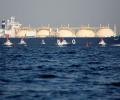
A Liquefied Natural Gas (LNG) carrier, chartered by an Indian firm, safely transited through the Strait of Hormuz -- the first Indian LNG tanker to cross the war-hit narrow shipping lane since the war in West Asia broke out more than three and a half months back.

India has condemned an attack on a Cyprus-flagged commercial vessel off the coast of Oman, which resulted in one Indian crew member going missing. The incident occurred amidst escalating hostilities between Iran and the US in West Asia, prompting India to call for immediate de-escalation and an end to targeting commercial shipping in the region.

FMSCI President Arindam Ghosh announced plans to bring Formula 1 back to India by 2030, and a round of the World Rally Championship and MotoGP by 2028, following a meeting with the Sports Ministry. The federation is focused on developing Indian drivers and promoting motorsports in the country.

28 Indian vessels carrying 778 seafarers are stranded in the Persian Gulf, prompting government monitoring and coordination to ensure their safety and security.

India has condemned the escalating attacks on commercial shipping in West Asia, particularly after a Thai-flagged vessel en route to India's Kandla Port was targeted in the Strait of Hormuz. The attacks have disrupted global oil and gas supplies, impacting India's energy imports.

A special NIA court in Ahmedabad has sentenced six Pakistani nationals to eight years of rigorous imprisonment for their involvement in the 2019 mid-sea seizure of 330 kg of 'brown heroin' off Gujarat's Jakhau coast. An Indian man, allegedly the intended recipient, was acquitted due to benefit of doubt. The National Investigation Agency had probed the case, alleging funds from the smuggling were intended for a terror organisation.

The Indian embassy in Ukraine is actively monitoring the critical situation of 13 Indian seafarers aboard MV AMIR1, who are reportedly under threat from drone and missile attacks near Ukraine's Black Sea coast.

The Directorate General of Shipping has advised Indian maritime agencies to restrict the deployment of seafarers to conflict areas following a US military strike that killed three Indian crew members off the Oman coast. India has also protested the attack, which occurred amidst heightened tensions in the Gulf region.

An Indian national was tragically killed in an attack on the commercial vessel MV OMORFI on July 18 while it was reportedly transiting Russian territorial waters in the Black Sea, the Ministry of External Affairs (MEA) confirmed, condemning the incident and calling for upholding international obligations for maritime safety.

The escalating conflict in West Asia has resulted in 19 ships carrying essential energy resources for India being stranded in the Strait of Hormuz, raising concerns about potential disruptions to the country's energy supply.

Built as an expendable, short-duration turbojet engine for single-mission applications, it can power tactical cruise missiles, anti-ship missiles, and long-range loitering munitions.

The US Navy seized an Iranian-flagged cargo ship in the Gulf of Oman, escalating tensions as ceasefire talks face uncertainty. The incident raises concerns about the fragile ceasefire and the ongoing blockade of the Strait of Hormuz.

The US Central Command (CENTCOM) has launched extensive precision strikes across multiple Iranian military installations, deploying both one-way attack aerial and sea drones for the first time, to degrade Tehran's ability to disrupt international maritime trade in the Strait of Hormuz.

An Indian-flagged crude tanker safely departed from the UAE's Fujairah after loading oil, despite an attack on the oil terminal. The Indian government is closely monitoring the situation in West Asia to ensure stable fuel supplies and maritime safety.

The US Central Command announced a new wave of strikes against Iranian military infrastructure, aiming to degrade Tehran's ability to threaten civilian mariners and commercial vessels. This comes as US President Donald Trump described the situation as a 'skirmish' and suggested Iran wants to 'make a deal,' while Iran's Foreign Minister warned of a 'decisive response' to any aggression.

A Thai cargo vessel was struck by missiles near the Strait of Hormuz, leaving three crew members missing and prompting a rescue operation by the Royal Navy of Oman.

The US Central Command (CENTCOM) confirmed striking the Guinea-Bissau-flagged oil tanker MT Jalveer, carrying 20 Indian seafarers, in the Gulf of Oman for allegedly violating the US blockade against Iran. This incident marks the third commercial vessel attacked by US forces in the region this week, with three Indian seafarers previously losing their lives in an attack on the MT Settebello.
The mortal remains of Merchant Navy chief officer Sagar Gupta, who was killed in a Black Sea attack amid the Russia-Ukraine conflict, were brought to his native place in Kanpur on Wednesday, 18 days after the incident, with his family demanding 'martyr' status and compensation.

Two Indian nationals have been confirmed dead and one is missing following attacks on merchant vessels amidst the ongoing conflict in West Asia. The Indian government has reiterated its commitment to the welfare of its citizens in the Gulf region.

Following a Memorandum of Understanding between the US and Iran to resolve the West Asia conflict, eleven India-bound vessels have successfully transited the Strait of Hormuz. This development signals a positive shift for maritime trade, with more Indian-flagged ships expected to pass through the crucial waterway soon.

India has no plans to ration fuel supplies despite ongoing disruptions in global energy markets, according to a top oil ministry official. The country has maintained adequate inventories of crude products and LPG while diversifying imports to manage supply risks.

Kuwait's air defence systems engaged 'hostile aerial targets', Jordan intercepted four missiles, and Bahrain sounded warning sirens after Iran launched retaliatory strikes targeting US military installations in the region.

The United States conducted retaliatory strikes against Iran, targeting over 80 sites, after accusing Tehran of attacking commercial vessels in the Strait of Hormuz, while Iran condemned the US decision to revoke a temporary suspension of sanctions on Iranian oil sales.

'The US was well aware of the nationality of the seafarers on board the vessels. It was not hidden. The nationality of those aboard a merchant ship is known to all the ports.' 'So, why did US shoot a missile that resulted in the deaths of the Indian mariners?'

Researching Japan was like going down a rabbit hole. There is just so much to see and do, but I finally decided we would stick to the 'Golden Route' of Tokyo, Osaka and Kyoto, notes Radhika Mittal.

India's finance ministry anticipates inflation will remain relatively contained in the coming months, supported by a correction in crude oil prices and softening input costs following the cessation of the West Asia conflict, despite earlier spikes in wholesale and retail inflation.

Successful interceptor, anti-ship, MIRV and hypersonic technology tests have strengthened India's position among a select group of advanced missile powers.

Amidst rising Middle East tensions, External Affairs Minister S Jaishankar highlights India's strategic dialogue with Iran to safeguard maritime traffic through the Strait of Hormuz, ensuring India's energy security and continued oil trade.
